Clothed in God's Own Armor
 📖 From the reading for October 12Proverbs 6:27–35 · Ephesians 6 · Isaiah 56–59
 Some fires warm a home, and some burn it to the ground. Today's readings ask where we are standing, and then show us a God who comes to stand with us and even hands us His own armor.
Proverbs 6:27–35 — Sin Is Fire, Not a Game
In these early chapters of Proverbs, a father is warning his son about adultery. He uses questions any child could answer: "Can a man embrace fire and his clothes not be burned? Can a man walk on hot coals without scorching his feet?" (Proverbs 6:27–28). The answer is obvious. Fire does what fire does. In the same way, "no one who touches her will go unpunished" (Proverbs 6:29).
The father then makes a comparison. People may understand a hungry thief, yet even he must repay "sevenfold" (Proverbs 6:30–31). The adulterer has no such excuse: he "lacks judgment; whoever does so destroys himself" (Proverbs 6:32). He wounds a marriage, his own name and a betrayed husband who "will not be appeased by any ransom" (Proverbs 6:35). Wisdom does not flirt with temptation, imagining it can be controlled. It honors marriage, guards the heart and keeps a safe distance from the flames. And if you have already been burned, the rest of today's reading points to a Redeemer who heals.
Ephesians 6 — Faithful at Home, Firm in the Battle
Paul, writing as "an ambassador in chains" (Ephesians 6:20), shows the church in Ephesus what life in Christ looks like in ordinary households. Children obey their parents "in the Lord" (Ephesians 6:1), and fathers must not "provoke your children to wrath" but raise them "in the discipline and instruction of the Lord" (Ephesians 6:4). To slaves and masters in the Roman world, Paul says both answer to one Lord. Masters must give up threats, because "He who is both their Master and yours is in heaven, and there is no favoritism with Him" (Ephesians 6:9). For us at work, the call is to "serve with good will, as to the Lord and not to men" (Ephesians 6:7).
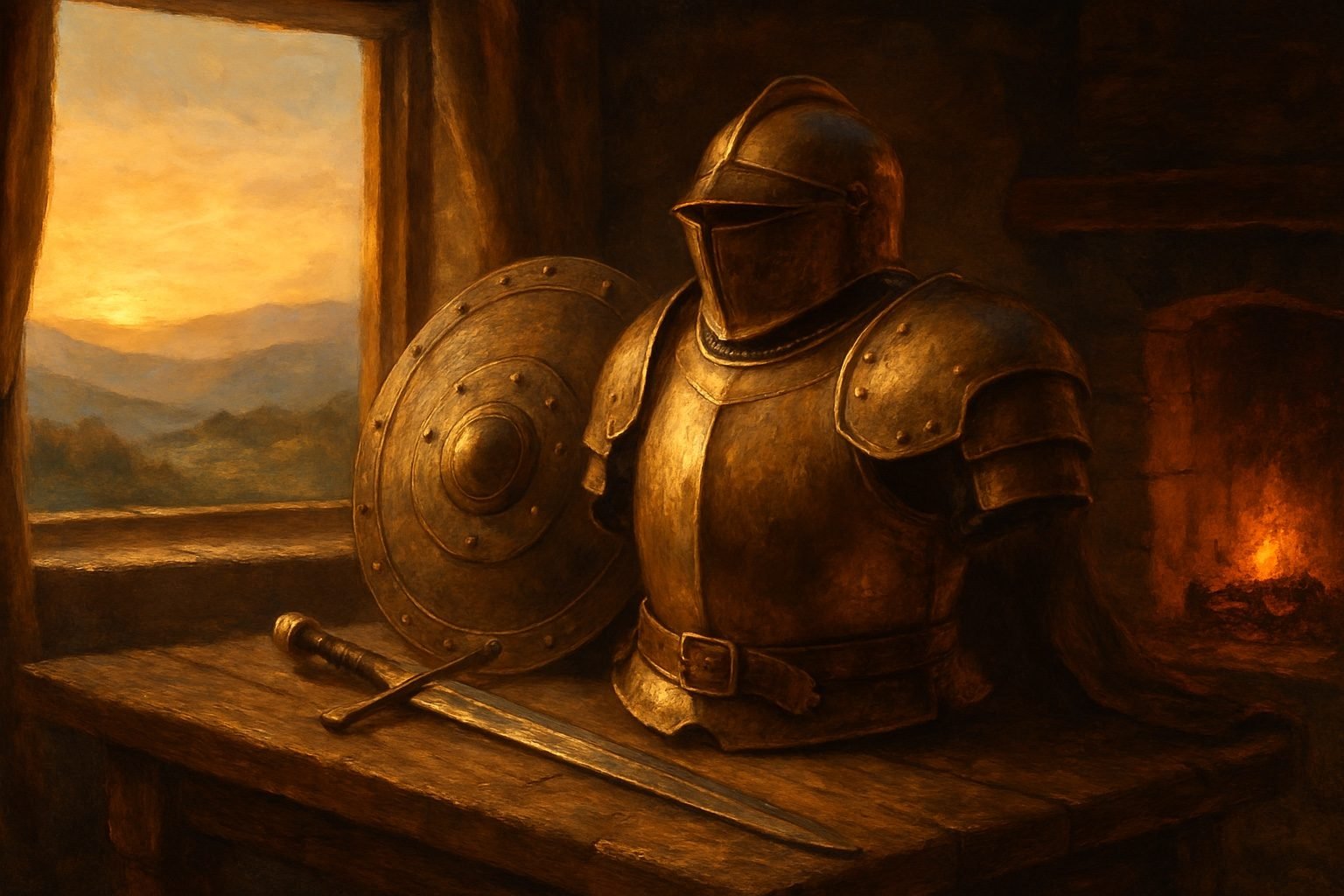
Then Paul lifts our eyes to the real battle: "our struggle is not against flesh and blood" (Ephesians 6:12). We are told to "be strong in the Lord and in His mighty power" (Ephesians 6:10) and to put on the full armor of God: truth, righteousness, the gospel of peace, faith, salvation and "the sword of the Spirit, which is the word of God" (Ephesians 6:17), all wrapped in prayer "at all times" (Ephesians 6:18). Notice the repeated word: stand. We do not win by our own strength. We hold ground that Christ has already won.
Isaiah 56–59 — God Welcomes the Humble and Comes to Save
Through Isaiah, the LORD speaks to His people with both welcome and warning. Foreigners and eunuchs, who feared being shut out, hear that "My house will be called a house of prayer for all the nations" (Isaiah 56:7). Yet Israel's leaders are "blind" watchmen (Isaiah 56:10), and the people's idolatry is described as unfaithfulness, like a spouse who has "uncovered your bed" for other lovers (Isaiah 57:8). Here is Proverbs' warning on a national scale. Still, the Holy One dwells "with the oppressed and humble in spirit" and promises, "Peace, peace to those far and near" (Isaiah 57:15, 19).
Chapter 58 exposes religion without love. God's chosen fast is "to share your bread with the hungry, to bring the poor and homeless into your home" (Isaiah 58:7). Chapter 59 admits the hard truth: "your iniquities have built barriers between you and your God" (Isaiah 59:2). No one could fix it. God "was amazed that there was no one to intercede. So His own arm brought salvation" (Isaiah 59:16). Then He dressed for rescue: "He put on righteousness like a breastplate, and the helmet of salvation on His head" (Isaiah 59:17). And He promised, "The Redeemer will come to Zion" (Isaiah 59:20).
How They Tie Together
All three passages are about faithfulness. Proverbs warns that unfaithfulness in marriage is fire. Isaiah shows that unfaithfulness to God builds walls we cannot tear down. Ephesians calls us to faithfulness at home, at work and in spiritual battle. But here is the beautiful thread: the breastplate of righteousness and helmet of salvation that Paul tells us to wear come straight from Isaiah 59. It is God's own armor, the armor He wore when He came to save.
Jesus is that Redeemer, the arm of the LORD who stood in the gap when no one else could. He broke down the barriers our sins built and brought peace to those far and near. Now He clothes us in what He wore. Because we stand in His righteousness, we can flee the fire, love our families, serve with good will and share our bread with the hungry.
Take It With You
• Name one "fire" you have been standing too close to, and take a clear step away from it today.
• Before work or school, pray through the armor of God piece by piece, thanking Jesus that it is His.
• Do one act of Isaiah 58 kindness: share a meal, give to someone in need, or welcome someone who feels left out.
Comments